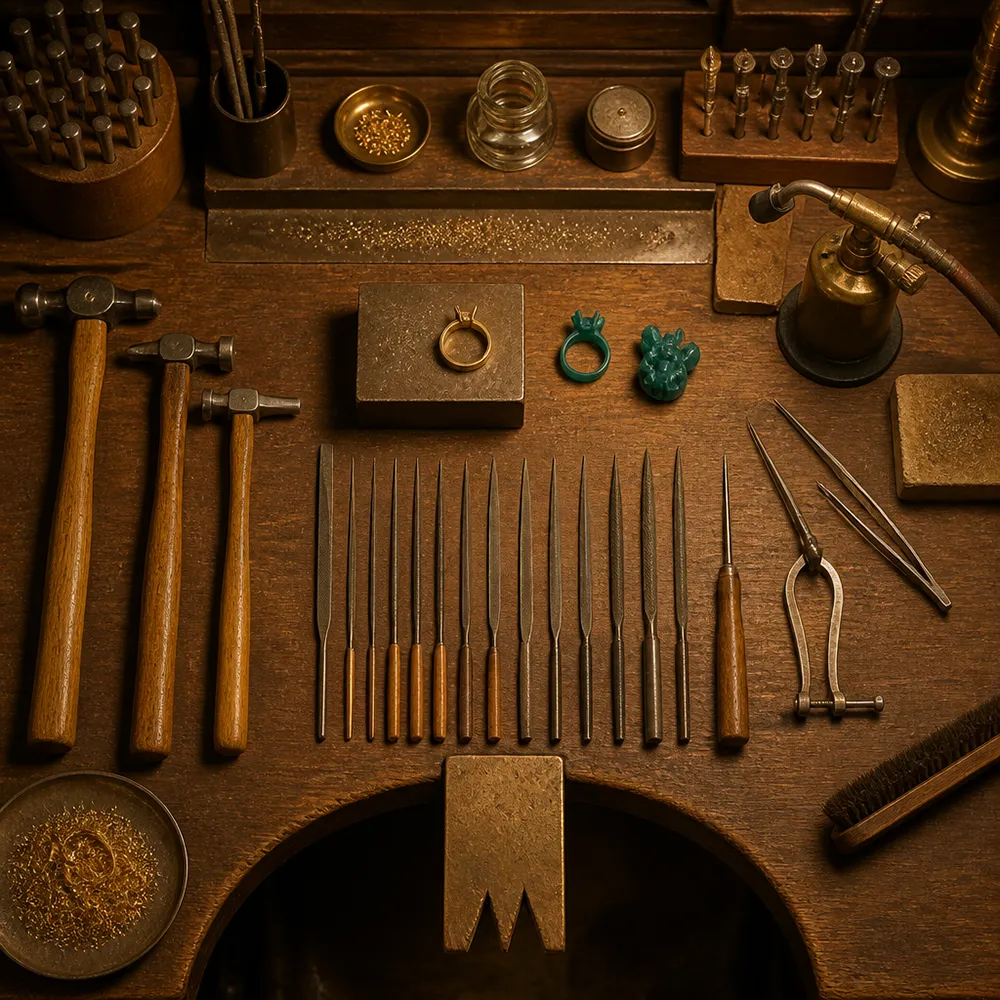
Every goldsmith we respect draws first. Not on a screen — on paper, with a pencil. This is not nostalgia. It is not a marketing position. It is the most honest way we know to think through a piece before a single gram of metal is touched.
What a Drawing Does That a Render Cannot
A CAD render shows you what something will look like. A drawing shows you how someone thinks. When we put pencil to paper, we are not producing a sales document — we are working through problems. The proportions of a setting. The weight of a shank. The way a stone will sit relative to the wearer's hand. These are spatial problems and drawing is how spatial problems get solved.
A render, by contrast, is optimised to look convincing. It smooths over decisions that haven't been made yet. It can make a poorly conceived piece look beautiful on screen and disappointing in metal.
The Client Sees Something Real
When we show a client a hand drawing, they are seeing exactly how far our thinking has progressed — no more, no less. The roughness of a sketch is honest. It invites correction. Clients look at a polished render and assume the decisions are final. They look at a drawing and immediately say what they actually think.
That conversation — the one that happens over a sketch — is where the best commissions are made. It is where we find out that the client's grandmother had a ring with a particular detail, or that the stone needs to sit lower than we imagined, or that the whole direction is slightly wrong and needs to change. Better to find that out over a pencil drawing than after three weeks of metalwork.
It Has Always Been This Way
The great goldsmiths of the Renaissance drew. Cellini drew. Fabergé's workshops drew. The drawing is not a preliminary to the real work — it is the beginning of the real work. We see no reason to change that.