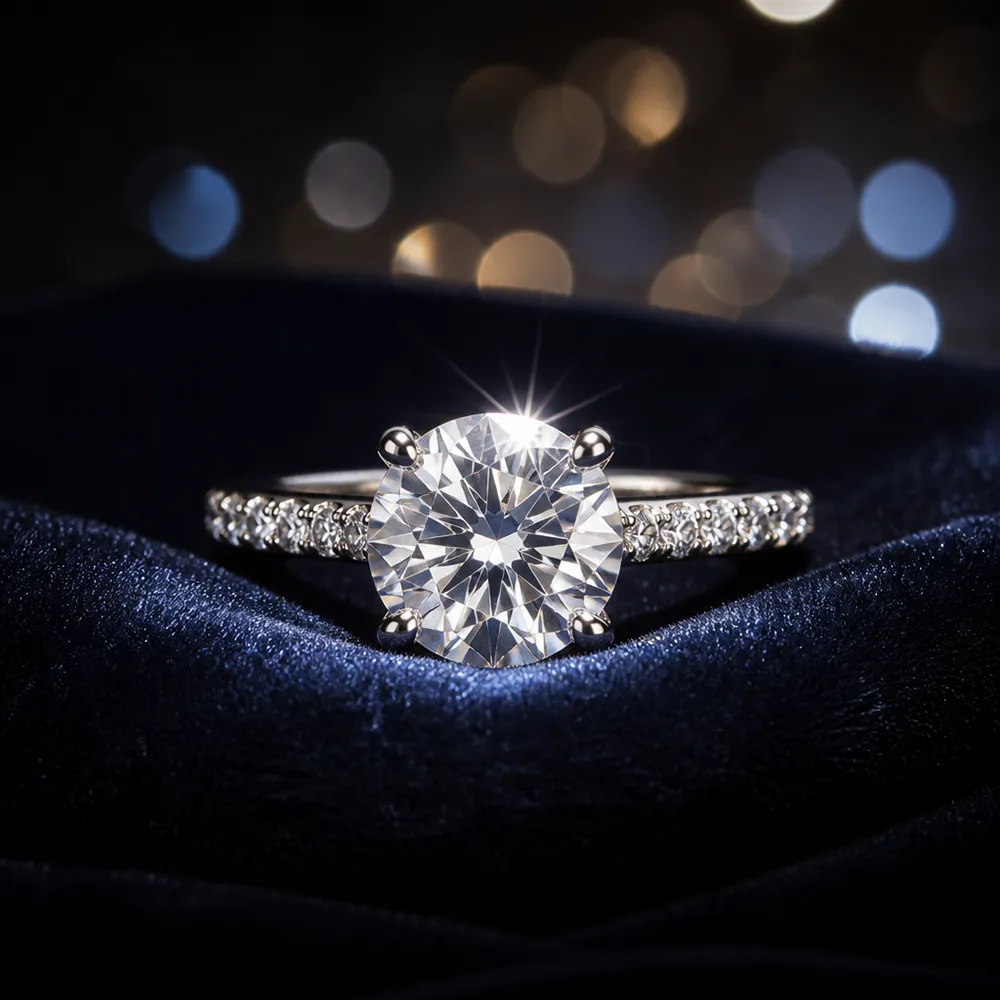
The old-cut diamond — also called the old European cut, or simply the old mine cut — was the dominant diamond cut from roughly 1830 until the introduction of the modern round brilliant in the early twentieth century. For decades it was considered outdated. Now it is coming back, and we think we understand why.
What Makes It Different
The modern round brilliant is engineered for maximum light return. Its fifty-eight facets are arranged with mathematical precision to reflect as much light as possible back through the table. The result is a stone that sparkles intensely under bright, direct light — the kind of light found in jewellery showrooms and well-lit restaurants.
The old-cut diamond has a smaller table, a higher crown, and a larger culet — the flat facet at the bottom of the stone. Its facets are larger and fewer. It was cut by hand, by eye, without the benefit of modern measurement tools. The result is a stone that is less symmetrical, less predictable, and considerably warmer than its modern counterpart.
What It Does That the Modern Cut Cannot
Old-cut diamonds come alive in candlelight and in the soft, diffused light of a London afternoon. Where a modern brilliant can look glassy and cold in low light, an old-cut glows. Its larger facets catch and hold light rather than returning it in a single sharp flash. People describe it as romantic. We would say it is simply better suited to the conditions in which most jewellery is actually worn.
There is also something about the imperfection. An old-cut diamond was made by a person, not a machine. You can see the decisions — where the cutter chose to follow the rough, where they prioritised weight retention over symmetry. This history is legible in the stone in a way that a laser-cut modern brilliant is not.
Why It Is Coming Back
We think people are tired of perfection. The modern brilliant is a triumph of engineering, but it can feel anonymous — every stone optimised to the same specification, producing the same effect. The old-cut is individual. Like everything handmade, it carries evidence of the person who made it. In a world of identical products, that distinctiveness is increasingly valued. We have always thought it should be.